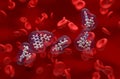
vitamin structure the blood flow ball and stick isometric view illustration |
||||||||||||||||||||||||||||||||||||||||
| navigate by keyword : vitamin four tocopherols tocotrienols antioxidant dietary fat vitamins eactive oxygen species soluble cardiovascular diseases cancer dementia skincare wound treatment esterified tocopheryl acetate chromanol ring chromane hydroxyl group radicals oils lotions skin hydrophobic multivitamin phenols weak bond peroxyl radical redox gene expression protein kinase smooth muscle aspirin warfarin cyclosporine vitamers deficiency calcium magnesium phosphate health human body blood levels overdose immune system kidneys circulation metabolism |
||||||||||||||||||||||||||||||||||||||||
|
||||||||||||||||||||||||||||||||||||||||
| Vitamin E is a group of eight fat soluble compounds that include four tocopherols and four tocotrienols. Vitamin E deficiency, which is rare and usually due to an underlying problem with digesting dietary fat rather than from a diet low in vitamin E, can cause nerve problems. Vitamin E is a fat-soluble antioxidant which may help protect cell membranes from reactive oxygen species. Worldwide, government organizations recommend adults consume in the range of 3 to 15 mg per day. As of 2016, consumption was below recommendations according to a worldwide summary of more than one hundred studies that reported a median dietary intake of 6.2 mg per day for alpha-tocopherol. |
||||||||||||||||||||||||||||||||||||||||
|
Stockphotos.ro (c) 2025. All stock photos are provided by Dreamstime and are copyrighted by their respective owners. |
||||||||||||||||||||||||||||||||||||||||