thupagara
|
||||||||||||||
|
|
|
||||||||||||
|
||||||||||||||




Stockphotos.ro (c) 2025. All stock photos are provided by Dreamstime and are copyrighted by their respective owners.
thupagara |
||||||||||||||||||||||||||||||||||||||||
| navigate by keyword : adorned beautiful bowl buddha buddhas carvings central circular condition dagaba dage diameter entrances extravagant four hallowed hold impressive indian influence lead nissanka outermost parakramabahu polonnaruwa reign relic roof sri stones terrace thupagara tooth used vatadage vatadageya wooden |
||||||||||||||||||||||||||||||||||||||||
|
||||||||||||||||||||||||||||||||||||||||
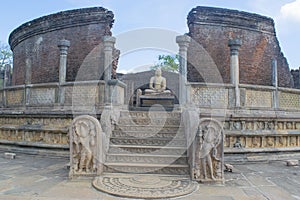
| This is a type of Buddhist structure found in cylon. It also known as a dage, thupagara and a cetiyagara. Although it may have had some Indian influence, it is a construct that is more or less unique to the architecture of ancient Sri Lanka. Vatadages were built around small stupas for their protection, which often preserved a relic or were built on hallowed ground. Circular in shape, they were commonly built of stone and brick and adorned with extravagant stone carvings. Vatadages may have also had a wooden roof, supported by a number of stone columns arranged in several concentric rows. |
||||||||||||||||||||||||||||||||||||||||
|
Stockphotos.ro (c) 2025. All stock photos are provided by Dreamstime and are copyrighted by their respective owners. |
||||||||||||||||||||||||||||||||||||||||