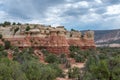
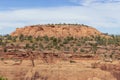
The Saddlehorn Formation is a significant geological feature found in the Colorado National Monument, located near Grand Junction, Colorado. It is a sedimentary rock formation that dates back to the Late Jurassic period, approximately 160 to 145 million years ago. The Saddlehorn Formation is composed primarily of sandstone and siltstone layers, with occasional interbedded shale and limestone. These rocks were formed in a shallow marine environment, which was present during the Late Jurassic when the region was covered by a sea known as the Sundance Sea. The sea retreated over time, leaving behind layers of sediment that eventually hardened into the rock layers we see today. The Saddlehorn Formation is famous for its striking red and orange colors, which are a result of iron oxide (hematite) staining in the rock. The rocks also contain fossilized remains of marine organisms, such as ammonites and bivalves, providing valuable insights into the ancient marine life of the area. In addition to its geological significance, the Saddlehorn Formation is an important part of the landscape in the Colorado National Monument. The dramatic cliffs, canyons, and rock formations created by the erosion of the Saddlehorn rocks make it a popular destination for hikers, rock climbers, and nature enthusiasts. Visitors to the Colorado National Monument can explore the Saddlehorn Formation through various hiking trails and scenic drives, such as Rim Rock Drive, which offers breathtaking views of the monument's unique geology. The Saddlehorn Visitor Center also provides information about the formation and its geological history, allowing visitors to learn more about this fascinating natural feature.
|