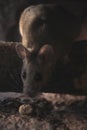
packrats

navigate by keyword : beady brown eyes fruit grey hairy health leaves live long mature packrats pests risk tail trap young

Packrat Royalty Free Stock Photo
2 Brown rats scurry allong the forest floor Royalty Free Stock Photo
A Brown rat scurries along a tree branch Royalty Free Stock Photo
A small mouse is sitting on top of some wheat Royalty Free Stock Photo
A small white mouse standing on its hind legs Royalty Free Stock Photo
Packrats are Pests and a Health Risk
A Detailed Packrat Nest Filled With Glistening Objects Generative AI.jpeg Royalty Free Stock Photo
A group of mice eating cheese in a honeycomb. Generative AI Royalty Free Stock Photo
A close up of a small white mouse looking up. Generative AI. Generative AI Royalty Free Stock Photo
A Brown rat scurries along a tree branch Royalty Free Stock Photo
A Brown rat scurries along the forest floor Royalty Free Stock Photo
2 Brown rats scurry allong the forest floor Royalty Free Stock Photo
While often considered cute, packrats can be a nuisance and a health risk if they decide to move onto ones property. Young packrats are often gray in color, while older packrats may be either gray or brown. Although there are many subspecies, most packrats have a long hairy rope type tail, and beady black eyes. They forage for fruit, berries, leafs, soft twigs and store up supplies of the same for use over winter. Their homes are usually built of gathered rocks and sticks but may include other materials. Beds are made of plant fibers, paper, or other gathered materials. These animals create havoc if they decide to set up home in a house, cellar, or shed. Packrats are relatively easy to catch by using a live trap such as shown.nnnnnnnnnnnn


Stockphotos.ro (c) 2025. All stock photos are provided by Dreamstime and are copyrighted by their respective owners.