p53

navigate by keyword : anticancer antigen apoptosis bound cancer cell cellular cycle death division dna genetic genome growth guardian mutation p53 protection protein regulation repair suppressor tetramer tumor

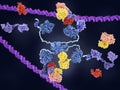
MDM2 controls the action of p53 tumor suppressor Royalty Free Stock Photo
The tumor suppressor p53 is degraded by a proteasome Royalty Free Stock Photo
Negative regulation of the p53 tumor suppressor Royalty Free Stock Photo
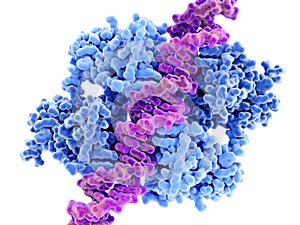
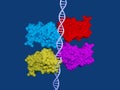
Four molecules of the cellular tumor antigen p53 complexed with DNA Royalty Free Stock Photo
Unveiling the Molecular Architecture of Protein p53 A Microscopic Night View of its Atomic Structure Royalty Free Stock Photo
Crystal structure of P53 tetramerization domain. Ribbons diagram in secondary structure coloring based on protein data Royalty Free Stock Photo
Detailed Molecular Structure Interaction: Protein p53 Binding with DNA - Double Exposure Royalty Free Stock Photo
P53 tumor suppressor bound to DNA
P53 protein Royalty Free Stock Photo
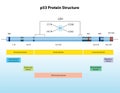
P53 protein structure Royalty Free Stock Photo
Protein p53 Binding to DNA: Molecular Interaction Detailed in Double Exposure Royalty Free Stock Photo
Molecular Structure Interaction: How Protein p53 Binds DNA - A Double Exposure Royalty Free Stock Photo
Structure of the oncoprotein SV40 large T antigen hexamer green and p53 tumor suppressor brown complex Royalty Free Stock Photo
Structure of the Helicobacter pylori CagA oncogene (green) bound to the human tumor suppressor protein p53 Royalty Free Stock Photo
Four molecules of the cellular tumor antigen p73 complexed with DNA Royalty Free Stock Photo
P53 prevents cancer formation and acts as a guardian of the genome. Mutations in the p53 gene contribute to about half of the cases of human cancer.


Stockphotos.ro (c) 2025. All stock photos are provided by Dreamstime and are copyrighted by their respective owners.