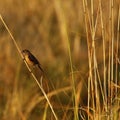
The Kalahari scrub robin (Erythropygia paena) is a species of bird in the family Muscicapidae. It is sometimes known as the sandy scrub robin. It is found in southern Angola, Botswana, Namibia, northern South Africa, and Zimbabwe, where it occurs in sandveld with low trees and scrub, on the edges of woodland, and in savanna. It will also inhabit human-altered environments including old fields and gardens. The Kalahari scrub robin is a seasonal breeder, with the season stretching from August to February, and peaking in November, also the peak of the wet season.[2] The species is monogamous and territorial, with territory sizes varying from 0.7 - 4.3 ha. Females are responsible for constructing the nest, which are weaved of shrubs and grasses and placed in low thorny bushes. The nest building stage takes around 5 days. The average clutch size is about two, although clutch size is bigger later in the season. Only the female incubates the eggs, the male defends the nest, aggressively attacking intruders and warning when predators approach. The incubation lasts around 12 days. Having hatched the female removes the eggshells from the nests and drops them away from the nest to disguise the nest from potential predators. After hatching the female broods the chicks for a between 3ââ¬â7 days. Both parents help in feeding the chicks and removing the faecal sacs. The chicks are altricial and take around 12 days to fledge
|