dunnottar castle stonehaven aberdeenshire scotland

navigate by keyword : aberdeenshire ancient architecture background backgrounds blue brave brick building buildings castle dunnottar flowers historic history ruins scotland sky stone stonehaven walls well window path footpath northeastern coast coastal rock cliff cliffs hill hills headland rocky keep sea seascape landscape coastline grass

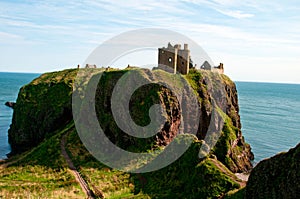
View of the path to the Dunnottar Castle. Stonehaven, Aberdeenshire, Scotland, United Kingdom Royalty Free Stock Photo
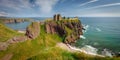
Dunnottar Castle,Stonehaven, Aberdeenshire, Scotland, UK, Royalty Free Stock Photo
Dunnottar castle, Aberdeenshire, Scotland Royalty Free Stock Photo
Beautiful Exterior inside Dunnottar Castle, near Stonehaven, Aberdeenshire, Scotland, UK Royalty Free Stock Photo
Dark room in Dunnottar Castle, near Stonehaven, Aberdeenshire, Scotland, UK Royalty Free Stock Photo
Dunnottar Castle,Stonehaven, Aberdeenshire, Scotland, UK,
Dunnottar Castle Stonehaven, Aberdeen, Royalty Free Stock Photo
Beautiful Exterior of Dunnottar Castle near Stonehaven, Aberdeenshire, Scotland, UK, during sunny day Royalty Free Stock Photo
Dunnottar Castle Stonehaven, Aberdeen, Royalty Free Stock Photo
Donnottar Castle, Stonehaven, Aberdeenshire, Scotland, UK, Just out of Stonehaven on the A90. Dunnottar Castle, "fort on the shelving slope") is a ruined medieval fortress located upon a rocky headland on the northeastern coast of Scotland, about 2 miles (3.2 km) south of Stonehaven. The surviving buildings are largely of the 15th and 16th centuries, but the site is believed to have been fortified in the Early Middle Ages. Dunnottar has played a prominent role in the history of Scotland through to the 18th-century Jacobite risings because of its strategic location and defensive strength. Dunnottar is best known as the place where the Honours of Scotland, the Scottish crown jewels, were hidden from Oliver Cromwell's invading army in the 17th century. The property of the Keiths from the 14th century, and the seat of the Earl Marischal, Dunnottar declined after the last Earl forfeited his titles by taking part in the Jacobite rebellion of 1715. The castle was restored in the 20th century and is now open to the public. The ruins of the castle are spread over 1.4 hectares (3.5 acres), surrounded by steep cliffs that drop to the North Sea, 160 feet (49 m) below. A narrow strip of land joins the headland to the mainland, along which a steep path leads up to the gatehouse. The various buildings within the castle include the 14th-century tower house as well as the 16th-century palace. Dunnottar Castle is a scheduled monument, and


Stockphotos.ro (c) 2026. All stock photos are provided by Dreamstime and are copyrighted by their respective owners.