convallariaceae

navigate by keyword : apex asparagaceae bead bell berry brownish called clear clone colonies colored connected consisting contains convallaria convallariaceae cool diameter dormant europe extensive family flowering flowers form formed formerly forming forms fruit fused genus ground hemisphere herbaceous keiskei leafy leaves like liliaceae lilioid lily majalis march mild monocots native nolinoideae northern perennial pips plant poisonous raceme rhizomes ruscaceae scented scientific seed separate shoots small species spreading spring stems sterile stolons subfamily summer sweetly tepals transcaucasica translucent upright valley white wide winters woodland

Lily of the valley Royalty Free Stock Photo
Lily of the valley
Lilly of the Valley Royalty Free Stock Photo
Lily of the valley Royalty Free Stock Photo
The beautiful fruits of the May lily of the valley Royalty Free Stock Photo
Black Grass Royalty Free Stock Photo
Lily of the valley Royalty Free Stock Photo
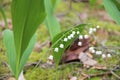
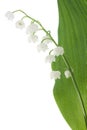
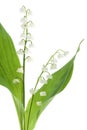
Lily of the valley, sometimes written lily-of-the-valley,[1] scientific name Convallaria majalis /] is a sweetly scented, highly poisonous woodland flowering plant that is native throughout the cool temperate Northern Hemisphere in Asia, and Europe. It is possibly the only species in the genus Convallaria (or one of two or three, if C. keiskei and C. transcaucasica are recognised as separate species). In the APG III system, the genus is placed in the family Asparagaceae, subfamily Nolinoideae (formerly the family Ruscaceae[3]). It was formerly placed in its own family Convallariaceae, and, like many lilioid monocots, before that in the lily family Liliaceae. C. majalis is a herbaceous perennial plant that forms extensive colonies by spreading underground stems called rhizomes. New upright shoots are formed at the ends of stolons in summer,[4] these upright dormant stems are often called pips.[5] These grow in the spring into new leafy shoots that still remain connected to the other shoots under ground, often forming extensive colonies. The flowers have six white tepals (rarely pink), fused at the base to form a bell-shape, 5–10 mm diameter, and sweetly scented; flowering is in late spring, in mild winters in the Northern Hemisphere it is in early March.


Stockphotos.ro (c) 2025. All stock photos are provided by Dreamstime and are copyrighted by their respective owners.