athan

navigate by keyword : abandoned air airport athan broughton cardiff church decommisioned fairwood fighter flown flying force fuselage gower hawker hunter monocoque old royal seat single squadron swansea village wales welsh wings xl612

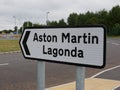
Aston Martin Lagonda Road Sign Royalty Free Stock Photo
The minaret of Mosque with loudspeaker against clear blue sky with some clouds, vertical photo Royalty Free Stock Photo
The minaret of Mosque with loudspeaker against clear blue sky with some clouds. ramada photo with copy space Royalty Free Stock Photo
Aston Martin DBX 707 (2022-) Royalty Free Stock Photo
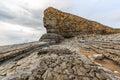
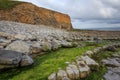
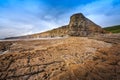
Glamorgan Heritage coast, UK Royalty Free Stock Photo
Hawker Hunter T.7 XL612
Mosque Exterior Royalty Free Stock Photo
Glamorgan Heritage coast, UK Royalty Free Stock Photo
Little Young Muslim Boy and Girl During Prayer Royalty Free Stock Photo
Illustration of Muslim Girl Praying in Mosque Royalty Free Stock Photo
Illustration of Muslim Boy Praying in Mosque Royalty Free Stock Photo
Little Young Muslim Boy During Prayer Royalty Free Stock Photo
Little Young Muslim Boy Praying Royalty Free Stock Photo
This Hawker Hunter T.7 XL612, which was the last Hunter operational with the Royal Air Force, making its last service flight on August 10, 2001,was languishing out-doors in the middle of Swansea Fairwood Common airport, UK. The Hawker has now been moved to St Athan Cardiff. It was flown for the first time on 12th December 1958, XL612 was delivered to 5 MU in January 1959 and served with 402 WTS and 43F Squadron before joining the Empire Test Pilot’s School in the mid 1970s. Originally designed as an air superiority fighter in the 1950’s, the Hunter went on to become the most successful post-war British Military aircraft with almost 2000 being produced. The Hawker Hunter was a transonic single seat fighter / ground attack monoplane, with swept-back wings, variable incidence tail plane, powered flying controls and cabin pressurisation. It was powered by a fifteen stage axial flow Rolls-Royce Avon MK 207 turbine engine developing 10,150 lbs thrust. The fuselage is of monocoque construction and manufactured in three main sections. The swept-back wings are two spar stressed skin structures covered with heavy gauge skin thereby ensuring a perfectly smooth finish and providing for the necessary stiffness of the internal structure.


Stockphotos.ro (c) 2026. All stock photos are provided by Dreamstime and are copyrighted by their respective owners.