arrowslits

navigate by keyword : added allow allowing arrowslits assailant assault battering blind block castle castles circuit confined contained control defences defenders developed difficult direct down earth enemy entrance fire flow front gate gatehouse gateway grille harry increase inside lengthened metal overcome passage portcullises projecting rebuilt reinforced retaliate romans series similar simple space spend spot stone style that those through timber towers traffic typically weakest wooden

Medieval fortress gate illustration featuring a stone structure with two cylindrical Royalty Free Stock Photo
Austrian fortified wall made of stone blocks with arrowslits Royalty Free Stock Photo
Loopholes and arrowslits on the white wall of a fort Royalty Free Stock Photo
Minaret in the mosque of Uqba Royalty Free Stock Photo
Pinhel – South Tower Roof Royalty Free Stock Photo
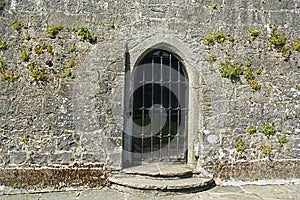
Castle Entrance
retro style stone castle or fort wall closeup. turret and old style arched openings Royalty Free Stock Photo
Detail of the white walls and steps leading up to the ancient watch tower Royalty Free Stock Photo
Despot Stefan Tower, Kalemegdan, Belgrade Royalty Free Stock Photo
Ahrtor Gate in Ahrweiler, Ahr River Valley, Eifel Mountains, Rhineland-Palatinate, Germany Royalty Free Stock Photo
Chateau de Vincennes on Gloomy Day, Paris, France Royalty Free Stock Photo
Castle Tower Royalty Free Stock Photo
Black and white architectural illustration of a medieval fortress and siege tower. On Royalty Free Stock Photo
The entrance was often the weakest part in a circuit of defences. To overcome this, the gatehouse was developed, allowing those inside the castle to control the flow of traffic. In earth and timber castles, the gateway was usually the first feature to be rebuilt in stone. The front of the gateway was a blind spot and to overcome this, projecting towers were added on each side of the gate in a style similar to that developed by the Romans. The gatehouse contained a series of defences to make a direct assault more difficult than battering down a simple gate. Typically, there were one or more portcullises – a wooden grille reinforced with metal to block a passage – and arrowslits to allow defenders to harry the enemy. The passage through the gatehouse was lengthened to increase the amount of time an assailant had to spend under fire in a confined space and unable to retaliate.


Stockphotos.ro (c) 2026. All stock photos are provided by Dreamstime and are copyrighted by their respective owners.