arnoaiexcl

navigate by keyword : 1849 500th allegories anniversary arnoaiexcl arras beneaiexcl bull central charles column dresden europe faculties fights figures gothic hacurren hnel jan krabice legal matyaiexcl aiexcl medical model monuments neo nafrac14 rnberg oako pardubice pedestal personalities philosophical prague sculptor statue superhuman surroundings sword theological unveiling vineyard vlaaiexcl weitmile workshop

Grass in sunset light Royalty Free Stock Photo
Cairn terrier in sunset light Royalty Free Stock Photo
The faded flower in sunset Royalty Free Stock Photo
GERMANY, DDR - CIRCA 1966  : a postage stamp from Germany, GDR showing Sorbischer Wissenschaftler und Verleger Jan Arnošt Smoler Royalty Free Stock Photo
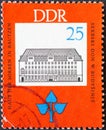
GERMANY, DDR - CIRCA 1966  : a postage stamp from Germany, GDR showing the house of the Sorbs in Bautzen. 150th birthday of Jan Ar Royalty Free Stock Photo
   
   
Charles IV statue, Prague,Czech Republic
Libice Royalty Free Stock Photo
Prague, Czech Republic, January 2015. The monument to the emperor and king Charles IV Royalty Free Stock Photo


A significant Neo-gothic monument based on the model of Arnošt Hähnel a sculptor from Dresden was made by the workshop in Nürnberg in 1848 for the 500th anniversary of the foundation of the Charles University. The monument was paid for by the university and through collections. The statue of Charles IV is superhuman in size, almost 4 m high. He leans on a sword with one hand and holds the foundation bull of the Prague University in his other hand. On the almost 4m high pedestal there are allegories of four faculties theological, medical, legal and philosophical and on the corners there are four figures of the significant personalities from Charles` time: Arnošt of Pardubice, Jan Očko of Vlašim, Beneš Krabice of Weitmile and Matyáš of Arras. The monument was built on the newly decorated space after the removal of the military guardroom and the transfer of the vineyard column. The unveiling of the monument took place only in 1849, because in 1848 there were fights in the near surroundings and the monument had to be covered to be protected. It is one of the most significant Neo-gothic monuments in Central Europe.


Stockphotos.ro (c) 2025. All stock photos are provided by Dreamstime and are copyrighted by their respective owners.