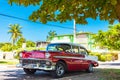
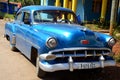
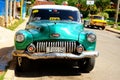
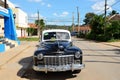
In 1953 Chevrolet renamed its series, and the Bel Air name was applied to the premium model range. Two lower series, the 150 and 210, also emerged (as successors to the Special and Deluxe series, respectively). The 1953 Chevrolet was advertised as "Entirely new through and through" due to the restyled body panels, front and rear ends. However, essentially these Chevrolets had similar frames and mechanicals to the 1949â1952 cars.The Bel Air was given a facelift in 1953. The pre-war technology, such as torque tube drive, six-cylinder splash feed engines, knee-action suspension, and split windshields of the early models, was phased out, and the foundations for the first post-war modern Chevrolet passenger car were finalized. The Bel Air series featured a wide chrome strip of molding from the rear fender bulge to the rear bumper. The inside of this stripe was painted a coordinating color with the outside body color, and "Bel Air" scripts were added inside the strip. Lesser models had no model designation anywhere on the car, having only a Chevrolet crest on the hood and trunk. 1953 was the first year for a curved, one-piece windshield.[1][5] The lower-cost Thriftmaster option installed on manual transmission cars was replaced by the larger "Thrift-King", a lower compression version of the 235.5 cu in (3.9 L) Blue Flame engine producing 108 hp (81 kW).
|