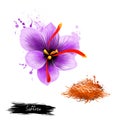
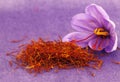
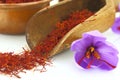
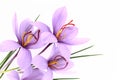
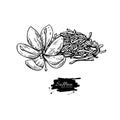
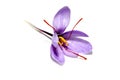
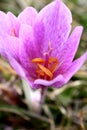
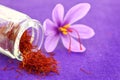
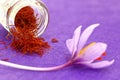
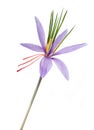
The saffron flower, Crocus sativus, is a striking and delicate flower known primarily for producing saffron, one of the most expensive spices in the world. Here's an overview of the saffron flower:Appearance:Color: The saffron flower has beautiful purple petals, with a distinct orange-red stigma (the part of the flower that is harvested to make saffron). The petals are typically a light to medium shade of purple.Size: The flower is relatively small, with a diameter of around 5â7 cm.Stigma: The vibrant red-orange threads in the center are what are collected for saffron. These threads are actually the styles of the flower (the female reproductive parts).Leaves: The plant also has narrow, grass-like leaves that grow in the autumn and often appear after the flowers.Growing Conditions:Climate: Saffron requires a temperate climate, with well-defined seasons. It thrives in dry, sunny environments and is typically grown in regions such as Iran, India (particularly Kashmir), Spain, and Greece.Soil: The plant prefers well-drained, slightly acidic soil.Harvesting: The flowers bloom in the autumn, and the delicate red stigmas are carefully hand-harvested, as they are the part of the flower used to make saffron. It takes thousands of flowers to produce just a small amount of saffron spice.Uses:Culinary: Saffron is used to flavor and color dishes, especially in cuisines from the Mediterranean, Middle East, and South Asia. It is a key ingredient in dishes like paella, risotto, biryani, and various desserts.Medicinal: Saffron has been used for its potential health benefits, including as an antioxidant, anti-inflammatory, and for improving mood.Aromatic: Saffron flowers are sometimes used in perfumery due to their pleasant, delicate fragrance.Significance:Saffron is known for its intense labor requirements, as harvesting the stigmas by hand is a delicate and time-consuming task, which contributes to its high cost. The plant is cultivated in small-scale farms due to its labor-intensive nature.
|