magnificent tigers india

navigate by keyword : adaptable ambushing background bandhavgarh belly bengal big black brown camouflage cats coat coats cub dark dense drinking eyecontact female forest grass grassland green hay hues hunters india interior jungle king legacy light limbs magnificent male medial orange overpowering parts pattern paws plants pond population prey ranthambore reddish reflection rings rocks royal rusty safari skin solitary stripes tail texture tigers trees unique ventral water waterbody white whitish wild wildlife yellow

Magnificent tigers of India Royalty Free Stock Photo
Magnificent tigers of India
Magnificent tigers of India Royalty Free Stock Photo
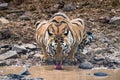
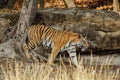
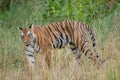
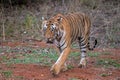
Tigers have rusty, reddish to brown coats, a whitish medial and ventral area, and stripes in hues of brown, hay or black. The form and density of stripes are different between subspecies, but the majority of tigers have more than 100 stripes. Each tiger has a distinctive pattern of stripes that can potentially be used to identify individuals, which is similar to how fingerprints are used to identify people. This is not, however, a favored method of identification, as it is difficult to record the stripe pattern of a wild tiger. It is thought that the stripes of a tiger act as a method of camouflage, keeping them hidden from prey. The stripe pattern extends onto a tiger’s skin, and if shaved, its unique camouflage pattern would be retained. Male tigers have wider forepaw pads than females, which is often noted by biologists in determining the gender of tigers when observing their tracks.nnAs with other cats, tigers are solitary hunters, ambushing their prey and overpowering them, using their formidable strength and weight to knock larger animals off balance. Despite their sizeable mass, tigers can reach speeds of about 35 to 40 miles per hour.


Stockphotos.ro (c) 2025. All stock photos are provided by Dreamstime and are copyrighted by their respective owners.