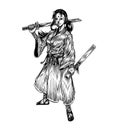
the katana girl illustration

navigate by keyword : artistically cutting danger decoration edge girl hardness illustration japanese katana presentation samurai sword usually wrapped

Standing Masked Samurai Girl Holding Katana, Hand Draw Illustration Royalty Free Stock Photo
Girl with katana - mma woman fighter. Vector design Royalty Free Stock Photo
The Katana Girl, 3D Illustration
anime teenage girl in black with a katana on his back, banner, vertical, illustration Royalty Free Stock Photo
Samurai girl in Japanese armor with a katana on her shoulder, standing in profile against the red sun. 2D illustration. Royalty Free Stock Photo
Girl with katana - mma woman fighter. Vector design Royalty Free Stock Photo
Female Japanese warrior or samurai girl. Young woman in kimono standing in fighting stance and holding katana sword Royalty Free Stock Photo
Girl with katana - mma woman fighter. Vector design Royalty Free Stock Photo
The katana originated from the tachi long sword in the 15th century and was traditionally used by Japanese samurai from the end of the 14th century early Muromachi period, especially in combination daishō, large-small with the short wakizashi shōtō, short sword. It is very similar to the earlier Chinese Miao Dao and the swords of the North Japanese Ainu. A real Japanese blade makes the hardness zone Hamon and in Koshirae, which is usually covered with ray skin or also shark skin false ray leather and usually artistically wrapped with silk ribbon Tsuka, unique by a real forging or hardening technique Tsuka Carved hardwood or ivory handles were only available for decoration or presentation swords. A katana blade usually consists of at least two different types of steel, a ductile one for the core and a hard one for the cutting edge. Both components were initially individually “refined” by multiple folding and welding before they were forged together into a blade.


Stockphotos.ro (c) 2026. All stock photos are provided by Dreamstime and are copyrighted by their respective owners.