jantar mantar jaipur

navigate by keyword : astronomical astronomy heritage india instruments jaipur jantar mantar monument rajasthan unesco world

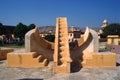
Astronomical instrument at Jantar Mantar Royalty Free Stock Photo
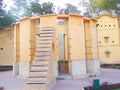
Yantra Raj at Jantar Mantar, Jaipur. India Royalty Free Stock Photo
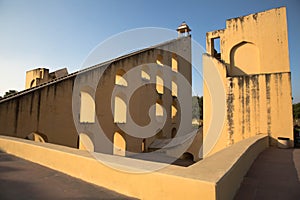
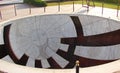
Rama Yantra - an Astronomical Instrument at Observatory, Jantar Mantar, Jaipur, Rajasthan, India Royalty Free Stock Photo
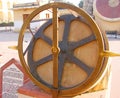
Nadivalaya - an Astronomical Instrument at Ancient Observatory, Jantar Mantar, Jaipur, Rajasthan, India Royalty Free Stock Photo
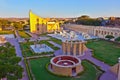
Observatory of Jantar Mantar, Jaipur Royalty Free Stock Photo
Jantar Mantar, Jaipur
Jaya Prakash Yantra - an Astronomical Instrument at Ancient Observatory, Jantar Mantar, Jaipur, Rajasthan, India Royalty Free Stock Photo
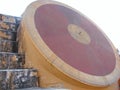
Krantivritta - an Astronomical Instrument at Ancient Observatory, Jantar Mantar, Jaipur, Rajasthan, India Royalty Free Stock Photo
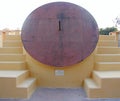
Krantivritta Sundial - an Astronomical Instrument at Ancient Observatory, Jantar Mantar, Jaipur, Rajasthan, India Royalty Free Stock Photo
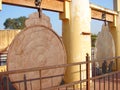
Yantra Raj - an Astronomical Instrument at Ancient Observatory, Jantar Mantar, Jaipur, Rajasthan, India Royalty Free Stock Photo
An instrument to measure time at Jantar Mantar, Jaipur. Royalty Free Stock Photo
Jantar Mantar, Jaipur, Rajasthan, India Royalty Free Stock Photo
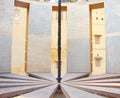
Interior of Rama Yantra - an Astronomical Instrument at Observatory, Jantar Mantar, Jaipur, Rajasthan, India Royalty Free Stock Photo
The Jantar Mantar monument in Jaipur, Rajasthan is a collection of nineteen architectural astronomical instruments, built by the Rajput king Sawai Jai Singh, and completed in 1734 CE.It features the world`s largest stone sundial, and is a UNESCO World Heritage site. Located near City Palace and Hawa Mahal of Jaipur, the monument features masonry, stone and brass instruments that were built using astronomy and instrument design principles of ancient Hindu Sanskrit texts.The instruments allow the observation of astronomical positions with the naked eye. The monument expresses architectural innovations, as well as the coming together of ideas from different religious and social beliefs in 18th century India. The observatory is an example of the Ptolemaic positional astronomy which was shared by many civilizations. The monument features instruments operating in each of the three main classical celestial coordinate systems: the horizon-zenith local system, the equatorial system and the ecliptic system. The Kapala Yantraprakara is one that works in two systems and allows transformation of the coordinates directly from one system to the other. The monument was damaged in the 19th century. Early restoration work was undertaken under the supervision of Major Arthur Garrett, a keen amateur astronomer, during his appointment as Assistant State Engineer for the Jaipur District.


Stockphotos.ro (c) 2026. All stock photos are provided by Dreamstime and are copyrighted by their respective owners.