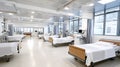
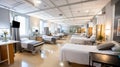
The image depicts an interior room setting that resembles a hospital ward or recovery area. The dominant feature is a bed positioned centrally against one wall it's equipped with side rails for safety, suggesting someone may need assistance moving in or out of the bed without falling overboard to prevent injury upon sudden movements post-surgery. This type of furniture typically indicates medical care and patient monitoring needs.The room itself has an unconventional design: vibrant blue walls adorned with oversized, cartoonish flowers painted on them provide a stark contrast against typical hospital decor, which often prioritizes sterile whites for sanitary purposes rather than aesthetic appeal. The bright colors could be intended to uplift spirits or perhaps indicate that the space is meant for pediatric patients where such playful imagery would seem more fitting.The floor appears clean and shiny, reflecting some light sources not visible in the image but likely from overhead lighting fixtures hinted by their reflection on the floor. Overhead fluorescent lights are partially visible at the ceiling's edge with two small sections of what seems like a sunken or recessed section painted white to blend into the room's color scheme.On each side wall, there is one large window covered with blinds that allow for some natural light diffusion while maintaining privacy and controlling exposure. The presence of windows implies an emphasis on creating daylight within this indoor setting which might be important for patient comfort during recovery periods or rehabilitation therapies if a treatment involves regular sun exposure as part of the healing process.Overall, the room gives off an impression of modern medical care with elements that deviate from standard hospital aesthetics to create a more comforting environment.
|