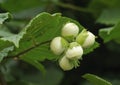
The hazel Corylus is a genus of deciduous trees and large shrubs native to the temperate Northern Hemisphere. The genus is usually placed in the birch family Betulaceae, though some botanists split the hazels with the hornbeams and allied genera into a separate family Corylaceae. The fruit of the hazel is the hazelnut. Hazels have simple, rounded leaves with double-serrate margins. The flowers are produced very early in spring before the leaves, and are monoecious, with single-sex catkins, the male catkins are pale yellow and 5ââ¬â12 cm long, and the female ones are very small and largely concealed in the buds, with only the bright-red, 1-to-3 mm-long styles visible. The fruits are nuts 1ââ¬â2.5 cm long and 1ââ¬â2 cm diameter, surrounded by an involucre husk which partly to fully encloses the nut. The shape and structure of the involucre, and also the growth habit whether a tree or a suckering shrub, are important in the identification of the different species of hazel. The pollen of hazel species, which are often the cause for allergies in late winter or early spring, can be identified under magnification 600X by their characteristic granular exines bearing three conspicuous pores
|