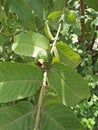
Uava is indigenous to the Central American region and are cultivated and naturalized throughout the tropics as well as in some subtropical regions. The guava tree is aperennial shrub or a general shade tree that grows up to a height of 4 meters. It leaves have conspicuous veins, are oblong and tapered at the end. Its green to yellowish fruits contain numerous seeds with a reddish, pink or yellowish flesh that is very delectable as well as nutritious. Nutritional value: Guavas are rich in vitamins A and C. A big guava contains over four times the amount of vitamin C as a single orange 212 mg/100 g fruit and the quantity of vitamin C increases as the fruit matures. The seeds are known to be rich in omega-3 and omega-6 polyunsaturated fatty acids. Depending on the variety, guava has good levels of the dietary minerals that includes phosphorus, potassium, calcim, and magnesium. Parts Used: Fresh or dried leaves, bark, fruits. Medicinal Properties: The guava fruit,leaves and bark of the plant possess some therapeutic properties and have been known to treat various disorders. The guava with a reddish flesh are extremely rich in antioxidants than the yellowish-green ones. The guava fruit has carotenoids, flavonoids, saponins, essential oils, eugenol, lectins, triterpenes as well as polyphenols. The fruit is also considered to be an excellent source of a dietary fiber known
|