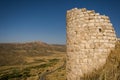
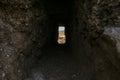
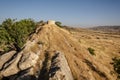
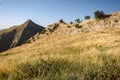
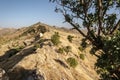
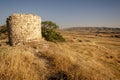
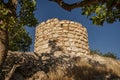
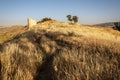
Dwin Castle, situated on top of a hill in the mountains north of Erbil, is a prime example: three dilapidated lookout towers, parts of the perimeter wall, several door jambs, and what seems to be an original floor level are all that is visible to the naked eye. Archaeological survey and excavation would clarify the state of preservation, and certainly local accounts of the castleââ¬â¢s history suggest this would be a prudent avenue of research.The castle is said to have belonged to Jalaladdin, grandfather of the formidable Saladin, who gathered a Muslim army to free the ancient Levant from the European Crusaders, most successfully at the Battle of Hattin in AD 1187.
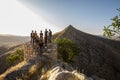
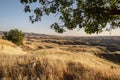
Next to the castle is a cemetery whose origins and development are completely unknown. The light-coloured stone slabs that mark the graves are decorated with carved reliefs, depicting the sun, swords, and geometric shapes. For some visitors, this decoration places the graves firmly within the Zoroastrian tradition ââ¬â the sun and swords were typical motifs of Zoroastrian religion. Others disagree, arguing that Zoroastrian funerary rites did not involve interment. Furthermore, the drive from Erbil into the mountains is spectacular, particularly in spring. Bright red poppies and glowing yellow flowers cover the green foothills, and from its high vantage-point Dwin Castle commands breathtaking 360ð views.
|